Why You Need a Checklist Before Hiring a Builder in Johannesburg
Hiring the wrong builder can cost you far more than money. In Johannesburg, many homeowners have faced:
- Projects that drag on for months or never finish - Budgets that double because of “extras” and poor planning - Unsafe work that doesn’t meet building standards - Legal problems with the City of Johannesburg when plans or approvals are missing
On top of that, South Africa has specific rules and bodies you must know about, such as the **NHBRC (National Home Builders Registration Council)**. This article gives you a practical, Johannesburg-focused **hire builder checklist SA** that you can follow step by step before you sign anything or pay large amounts.
You can print this, save it on your phone, and tick each step off as you go. Slowing down now is the best way to protect your home, your money, and your peace of mind.
Step 1: Confirm the Builder’s Legal Status and Registration
Before anything else, make sure the builder is a real, traceable business. Proper **builder verification Johannesburg** starts here.
What to check
- **Registered business name and number** - Ask: “What is your registered company name and CIPC number?” - Check the **CIPC** (Companies and Intellectual Property Commission) records to confirm the business exists and is active.
- **Physical address and stable contact details** - Ask for: - A physical office or workshop address (not just a PO Box) - A landline number or at least a verifiable business contact - Be cautious if: - They only give a cellphone number and no address - They refuse to share where they are based
- **Tax compliance** - For bigger projects, ask for a **tax clearance certificate** or proof they are tax compliant. - This shows they are operating properly and can be used by banks or professionals you may work with.
Why this matters
- A registered entity is easier to hold accountable in contracts and disputes. - Fly-by-night operators often disappear once problems start, leaving you with no recourse.
Questions to ask and documents to request
- “What is your full registered business name and registration number?” - “Can you send me a copy of your CIPC registration?” - “Where is your office or workshop located?” - “Can you provide a recent tax clearance certificate?”
Red flag: If they get defensive or vague when you ask for these details, proceed with extreme caution.
---
Step 2: Verify NHBRC Registration and Other Relevant Credentials
A proper **NHBRC check** is essential for many building projects in South Africa.
What is the NHBRC and why is it important?
- The **NHBRC (National Home Builders Registration Council)** protects homebuyers and sets minimum building standards for new homes. - For **new residential builds** and **major structural work** (like adding a new storey), the builder must usually be **registered with the NHBRC**, and the home must be enrolled with the NHBRC.
When NHBRC registration is required
Typically required for:
- New houses and townhouses - Major structural additions (e.g., new wing, extra floor, significant structural changes)
Often not required for:
- Minor renovations (e.g., painting, tiling, basic kitchen or bathroom revamps without structural changes) - Small non-structural repairs
If you are unsure, ask the NHBRC or a professional (architect/engineer) to clarify.
How to do an NHBRC check
- Ask the builder for their **NHBRC registration number**. - Confirm it directly with the NHBRC: - Visit the official NHBRC website, or - Call the NHBRC helpline and ask them to verify the builder’s registration.
Other useful memberships
While not legally required, these can show commitment to standards:
- **Master Builders Association** or similar industry associations - Professional bodies related to specific trades (e.g., for electricians or plumbers)
Mini checklist: Credentials to request
- NHBRC registration number (and confirm it yourself) - Copies of: - NHBRC registration certificate - Any Master Builders or similar membership certificates - Trade qualifications where relevant (e.g., electrician, plumber)
Red flag: A builder claiming to be NHBRC-registered but refusing to give a registration number.
---
Step 3: Check Experience, Track Record, and References
Experience in Johannesburg’s specific conditions (soil, weather, bylaws, local suppliers) is a big advantage.
What to ask the builder
- “How long have you been operating in Johannesburg?” - “What types of projects do you specialise in? (extensions, renovations, new builds, complexes)” - “Can you show me a portfolio of similar projects?”
Ask for:
- Photos of **recent** projects (within the last 2–3 years) - A short list of projects in areas similar to yours
References: Don’t skip this
Ask for at least **3 recent client references** with:
- Names and phone numbers - Brief description of the work done - When the project was completed
Then actually call them.
Questions to ask references
- “Were you happy with the quality of the work?” - “Did the project finish close to the agreed budget?” - “Did they finish roughly on time? If not, why?” - “How did they communicate during the project?” - “How did they handle problems or mistakes?” - “Would you hire them again?”
Site visits
If possible:
- Visit at least **one completed project** to see the final quality. - Visit **one active site** to see: - Organisation and cleanliness - How workers behave - Safety measures in place
Red flags
- Reluctance to provide references - Only very old projects (more than 5 years ago) - Only projects far outside Johannesburg, with nothing local to show
---
Step 4: Assess Insurance, Guarantees, and Safety Compliance
You need to know what happens if something goes wrong.
Insurance
Ask for proof of:
- **Public liability insurance** - Covers damage to your property or injury to third parties caused by construction activities. - **Contractor’s all-risk insurance** (for larger projects) - Covers certain losses or damage during construction.
Workers’ cover
- Ask if they are registered for **COIDA / Workmen’s Compensation**. - This helps ensure workers injured on site are covered, reducing the risk of claims against you.
Workmanship guarantees
Ask:
- “What guarantee do you offer on your workmanship?” - “How long does it last and what does it cover?” - “How do I log a claim if there’s a problem?”
Commonly, builders may offer 3–12 months on workmanship, separate from any NHBRC cover.
Health and safety
Look for:
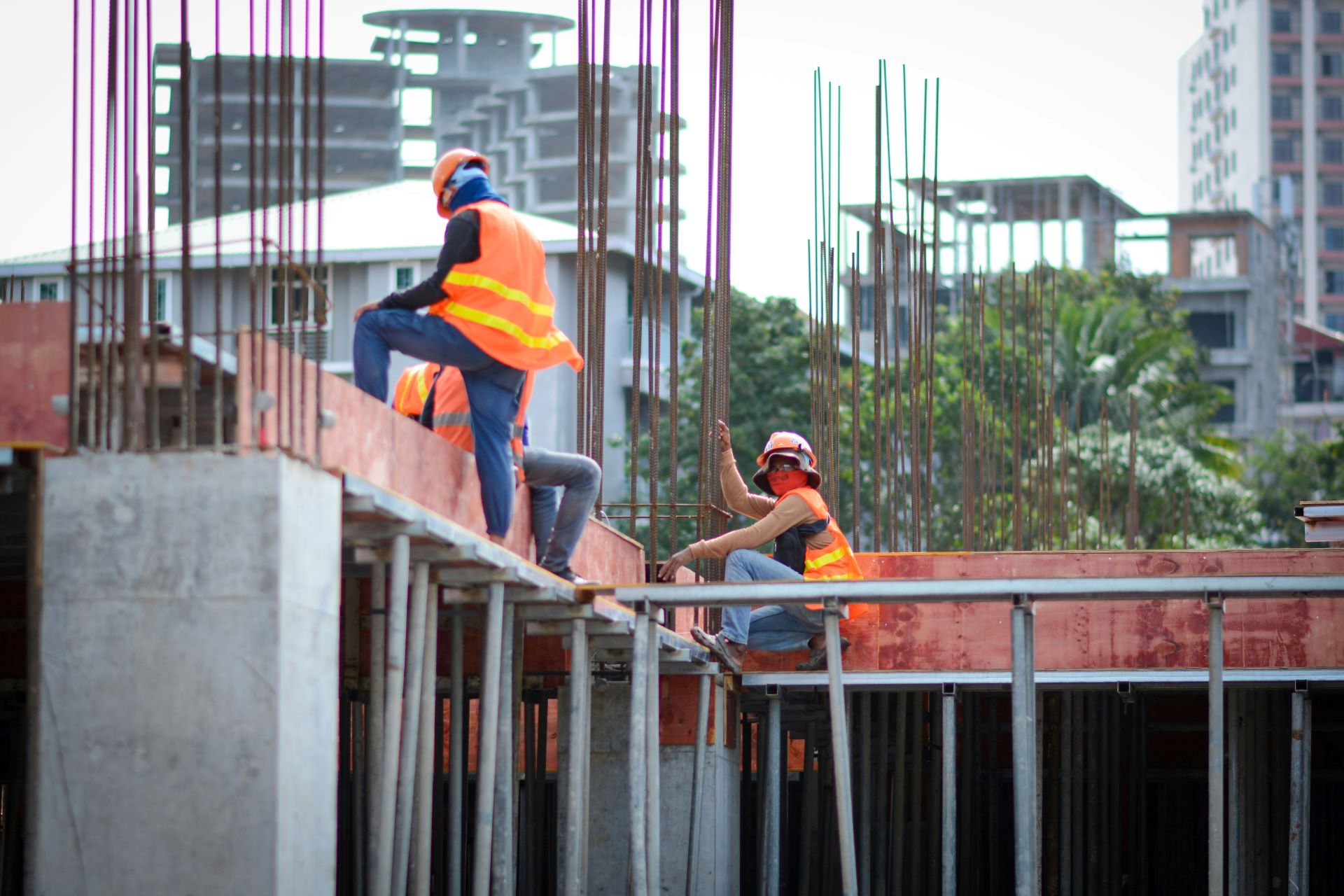
- Workers using **PPE (personal protective equipment)** like helmets and safety boots - Proper scaffolding and ladders - Clear site supervision
Why it matters: Serious accidents can delay your project and create legal and financial headaches.
---
Step 5: Get Detailed, Written Quotes from Multiple Builders
Never rely on a verbal estimate or a one-line quote.
How many quotes?
- Aim for **at least 3 written quotes** from different Johannesburg builders.
What a detailed quote should include
- **Scope of work** – clear description of what is included - **Materials** – brands, specifications, and quantities where possible - **Labour** – how labour is costed or included - **Timeframes** – estimated start and completion dates - **Exclusions** – what is **not** included (e.g., landscaping, appliances) - **Provisional sums** – allowances for items not yet finalised (e.g., tiles at Rxxx/m²)
Comparing quotes
- Compare **like-for-like**: - Are they using similar materials and specifications? - Are all major items included in each quote? - Be wary of: - One quote that is **much lower** than the others – it may mean corners will be cut or “extras” will appear later. - Unusually high quotes without clear justification.
Red flags
- Pressure to “accept today” or lose the price - Refusal to provide a written quote - Cash-only demands with no invoices or receipts
Step 6: Review the Contract Carefully Before Signing
A proper written contract is non-negotiable.
What must be in the contract
At minimum, ensure it includes:
- Full **scope of work** - **Plans and specifications** (attach drawings, engineer’s designs, finishes schedule) - **Start and completion dates** - Any **penalties for delays** (if agreed) - **Variation/change order process** – how changes are requested, costed, and approved - **Warranties and guarantees** – what is covered and for how long - **Dispute resolution** – how disagreements will be handled (e.g., mediation, arbitration) - **Termination clause** – when and how either party can end the contract
Attach all technical documents
Make sure the following are attached or clearly referenced:
- Approved **building plans** - Structural engineer’s drawings and details (if applicable) - Finishes schedule (tiles, taps, paint colours, etc.)
Put verbal promises in writing
If the builder says, “Don’t worry, we’ll include that,” respond with:
- “Please add that to the contract so we are both clear.”
For larger or more complex projects, consider asking an attorney or construction professional to review the contract before you sign.
Step 7: Set Clear Payment Terms and Protect Your Money
Payment structure is one of the biggest risk areas.
Deposits
- Large upfront deposits are risky. - A reasonable deposit may cover: - Initial materials ordered specifically for your job - Early setup costs - Be cautious if asked to pay a **very high percentage** (e.g., 50–80%) before work starts.
Progress payments
- Link payments to **clear milestones**, for example: - Site setup and foundations complete - Walls up to roof height - Roof structure and covering complete - Plastering and internal services (plumbing, electrical) installed - Finishes (tiling, painting, fittings) complete
Only pay when you have checked the work against the milestone.
Proof of payment
- Avoid paying large amounts in cash. - Use bank transfers with clear references. - Always get **receipts** and keep them.
Retention
- **Retention** means holding back a small percentage (e.g., 5–10%) of the contract value until: - Final inspection is done, and - All defects on the **snag list** are fixed. - This gives the builder an incentive to complete the job properly.
Final payment
- Never pay the full amount before: - Final inspection - Snag list completion, in writing - You are satisfied the work meets the contract
---
Step 8: Confirm Plans, Permissions, and Compliance with Local Regulations
Johannesburg has strict rules about what you can build and where.
Building plans and approvals
Many projects require **approved building plans** from the **City of Johannesburg**, especially:
- New houses or major extensions - Adding extra rooms, storeys, or changing structural walls - Significant changes to drainage or sewer connections
Who submits the plans?
- Usually an **architect** or **draughtsperson** prepares and submits the plans. - The **builder must build according to the approved plans** – not “from the head”.
Ask:
- “Who will handle plan submission to the City of Johannesburg?” - “Can I see proof when the plans are approved?”
Inspections and completion
- Certain stages may need **municipal inspections** (e.g., foundations, drainage). - At the end, you may need a **completion certificate** or similar documentation.
Why compliance matters
Building without approvals can lead to:
- Fines and penalties - Orders to demolish or alter illegal work - Big problems when you try to sell or bond the property
Make sure your builder understands local bylaws, zoning, and any **servitudes** (areas where you may not build).
---
Step 9: Evaluate Communication, Professionalism, and Fit
Technical skills are not enough. You’ll be dealing with this person for weeks or months.
What to look for
- **Responsiveness** – Do they reply to calls and emails within a reasonable time? - **Clarity** – Do they explain things in plain language you understand? - **Punctuality** – Do they arrive on time for meetings and site visits? - **Professionalism** – Are their quotes, emails, and documents clear and well-presented?
Trust your instincts
If you feel:
- Rushed - Talked down to - Ignored when you ask questions
…it may be better to walk away, even if the price looks good. A good working relationship is essential for a successful project.
---
Printable / Saveable Checklist Summary
Print this section or screenshot it on your phone and tick items off as you go.
Legal & Registration
1. Confirm full registered business name and CIPC number. 2. Verify physical address and stable contact details. 3. Request and review tax clearance certificate (for larger projects).
Credentials
4. Get NHBRC registration number and confirm it with the NHBRC. 5. Request copies of NHBRC and any Master Builders or other membership certificates. 6. Check trade qualifications where relevant (plumber, electrician, etc.).
References & Track Record
7. Ask how long they have operated in Johannesburg and what they specialise in. 8. Review a portfolio of recent, similar projects. 9. Obtain at least 3 recent client references and call them. 10. Visit at least one completed and, if possible, one active site.
Insurance & Safety
11. Request proof of public liability insurance. 12. Confirm contractor’s all-risk cover (for larger projects). 13. Check that workers are covered under COIDA/Workmen’s Compensation. 14. Confirm basic health and safety measures on site.
Quotes
15. Get at least 3 detailed written quotes. 16. Ensure each quote lists scope, materials, labour, timelines, and exclusions. 17. Compare quotes like-for-like and question very low or very high prices. 18. Avoid builders who refuse written quotes or insist on cash only.
Contract
19. Insist on a written contract – not just a quote and a handshake. 20. Check that the contract includes scope, dates, payment terms, variations, warranties, and dispute resolution. 21. Attach approved plans, engineer’s designs, and finishes schedules. 22. Make sure all verbal promises are written into the contract.
Payments
23. Agree on a reasonable deposit (not the majority of the project cost). 24. Set progress payments linked to clear milestones. 25. Pay via bank transfer where possible and keep all receipts. 26. Consider a retention amount until the snag list is completed. 27. Do not pay the full amount before final inspection and snagging.
Permissions & Compliance
28. Confirm whether building plans are required and who will submit them. 29. Obtain proof of plan approval from the City of Johannesburg where needed. 30. Confirm the builder will follow approved plans and arrange required inspections.
Communication & Fit
31. Assess responsiveness, clarity, and professionalism. 32. Trust your gut – if something feels wrong, reconsider before committing.
Take Your Time and Protect Your Investment
Rushing into hiring a builder because you are excited to start can be tempting, but taking the time to follow this checklist will greatly reduce the risk of fraud, poor workmanship, and legal trouble. Johannesburg’s building environment has its own rules and challenges; being informed and methodical is your best protection.
Complete each step **before** you sign a contract or pay large sums. Keep all documents, emails, photos, and approvals organised in a dedicated folder (physical or digital). For large or complex projects, consider getting advice from a quantity surveyor, architect, or attorney to review your plans and contract.
Disclaimer
This article is general information for homeowners in Johannesburg and South Africa. It is not legal or professional advice. Regulations, municipal processes, and industry practices can change, and every project is different. For specific questions or complex situations, please consult a qualified professional or the relevant authorities.